
New
Comments

  • Emma Watson: One of my friends died in a such manner one year ago. Poor, poor John. 14.12.2011 15:39
  • George Presley: Crazy car driver! How stupid he had to be so that to let such accident happen.. No comments - emotions only!!! 14.12.2011 15:26
All comments
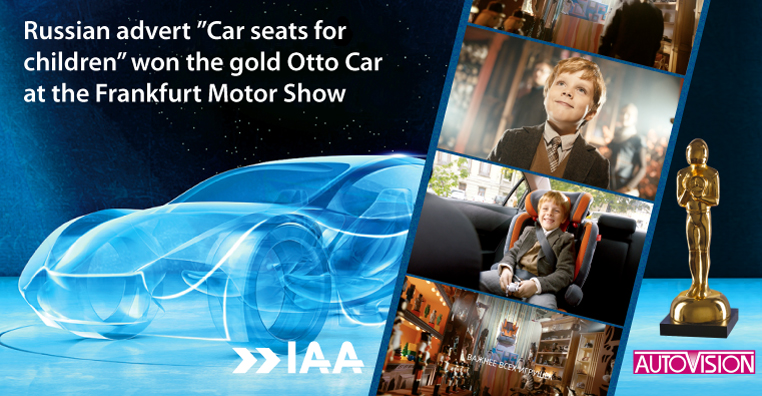
  • Elvise Brenton: Nice antique shop! I want to come here with my children sometime) 14.12.2011 15:34
All comments
  • Elvise Brenton: Ha-ha-ha!!! Very funny ad. The guy really enjoyed the speed till the very end. Gorgeous!!! 14.12.2011 15:31
All comments


Opinions

Comments and remarks of renowned journalists, writers and public figures on the topic of the driving culture. Our experts and authors are resolute that respectful behavior implies high safety standards

Valery Kozlov
MD, Professor, "human factor" expert

Pedestrians should be taught psychology on the road

There is a remarkable psychological expression - there are no good or bad people, there are people following a correct or erroneous behavior program. Therefore, the growing numbers of pedestrians involved in traffic road accidents can be only explained by improper setting of the system of the road safety. This system, therefore, is not capable of developing correct behavior program among pedestrians. Already the recognition of this fact allows starting the search of effective tools to reduce the gruesome statistics of pedestrian injuries and fatalities. If, however, we elect progressing the path whereby to put all the blame on the pedestrians this counterproductive approach will not produce any tangible result but the same beaten slogan "follow the traffic rules". Unfortunately, the latter approach is dominant as it is the only one. Therefore, nobody knows what to do to prevent road traffic injuries inflicted on pedestrians. There is a simple explanation to the status quo: the road safety system mainly consists of a primitive technocratic approach with almost non-existent psychological provision. There are no disciplines in curricula of the Russian universities to address transport psychology. There is a rare chance that an expert on transport psychology is found among the payroll of an institution dealing with the transport system. These are experts having engineering and other technical background that are taking leading positions in the road transport system. No wonder that they are "running the show" without having a clue as to what is going on, demonstrating their utter impotence.

Let us now try to understand why pedestrians under situation when they, unlike motor vehicle drivers, are given the priority at the pedestrian road crossings, are more likely...

Full article
Mikhail Blinkin
Scientific director of the Research Institute of Transport and Public Road System

Gruesome fate of pedestrians in Russia

The domestic statistics of motor vehicle collisions with pedestrians was always discouraging. Today it is getting even worse. This conclusion is especially visible against the background of progress Russia recently made in getting tangible improvement in all other indicators of the road traffic safety.

The pedestrian hit statistics has many causes; I will elaborate on the most obvious ones.

Mega-cities in developed countries feature road network that is divided into two fundamentally different contours. The first contour deals with the city streets, going through the usual urban development districts. This is purely pedestrian habitat; the pedestrians are ruling here along with public transportation vehicles and cyclists. In this area pedestrians go underground only to have a subway ride. The cars on these streets form the "oppressed class": they should follow the draconian speed limit here (50 or even 30-40 km/h), and the traffic lights are erected at every corner.

The second contour consists of highways which in US are referred to as freeways. These roads are always laid outside the development areas (traffic here is following overpasses and tunnels, in the railroad right-of-way, it is crossing the city via industrial zones, etc.). To enter these roads one has to use infrequent and specially developed intersections. There are no same level crossings, or T-junctions accessible directly from the local driveways.

Freeways belong solely to cars: speed is also kept under limits; however, these limits are pretty comfortable, let's say the limit can be set at 80 or even 100 miles an hour.

Of course, nowhere in the world this road metropolis network was built "overnight". The development of this road infrastructure was preceded by years...

Full article
Natalia Agre
President of the NGO “Movement for Safe Traffic”

Start with yourself

The Non-Government organization «Risk-Free Driving» has numerous ambitious plans dealing with changing the culture on the Russian automobile roads. Among these plans there are social campaigns to improve the culture safe behavior, to streamline legislation, to joint efforts of the State, NGO and commercial organizations to improve situation on the roads to the better. However all these plans have no meaning if there is no personal input from each participant. It is necessary to start with yourself. The main requirement is to improve the behavioral standard on the road.

We all know too well what is the situation at the Russian automobile roads. Despite low number of cars per capita the risk of fatalities and injuries is extremely high. The attitude towards other traffic participants is far from being friendly. There is a feeling that the metal and glass that shield a driver from the outside world make a shell that devoid the owner of decent human features such as respectability, patience and tolerance to the people around. Seemingly the road for those who carry this shell is nothing but a battlefield where the fittest survives.

In fact the road is good to reflect what happens in our everyday life. Driving culture reflects as a mirror the culture of society as a whole. We stopped letting women go first and offer seats to senior people or say hello to neighbors living in the same block of flats.

We are quick to find scapegoats or those whom to blame for our misconduct. It is very simple to blame the world that surrounds us. The traffic lanes got blurred, the pit holes were not leveled, the road was not duly debottlenecked, there are way too many commuting minivans. We find the scapegoats – they are road construction workers,...

Full article
Natalia Agre
President of the NGO “Movement for Safe Traffic”

November 20 was declared the International Day to Commemorate Casualties of the Motor Vehicle Accidents

Every year on the third Sunday of November the world honors the Day to Commemorate Casualties of the Motor Vehicle Accidents. On this day we remember those who are no longer with us, whom we lost in road accidents.

Road traffic injuries is one of the leading causes of death among young people and children in the world. Every day as many as 3500 people in motor vehicle accidents. On the annual basis the casualties amount to more than 1.2 million people dead and about 50 million injured.

And this is not just insipid statistics. Behind each case there are broken lives, sorrow for the family and loved ones, the loss of a mother, father or a child.

The victims of traffic accidents are not just the lost  lives. People wounded, those sustained serious injuries, becoming disabled - their life will be always split into "before" and "after" the disaster. How many times will they say to themselves: "If I were ..."

... not go that fast;

... not cross the middle line;

... not in hurry and stopped at the red traffic light; 

... not drinking that shot;

... buckled up; 

... buckle up my child in the car seat.

There is no second chance in life. To make sure that neither you or your family members are not remembered annually  on the third Sunday in November be mindful of the traffic rules. They are developed invented not for traffic police, they are developed for you. They are developed to protect your safety on the road. They are developed to save lives - yours and your loved ones.

The value of a human life in Russia is not that pricey. Traditional Russian fatalism leads in the fact that the behavior of drivers on local roads becomes a survival game. In the Day to Remember Road Traffic...

Full article

News

Login Register
Login Register